Now that we had managed the last of the Saint Lawrence seaway locks, the next chapter in our travels was getting to Quebec City. Here we wanted to spend a few nights to enjoy the sites, ride our bikes a bit and take a little breather.
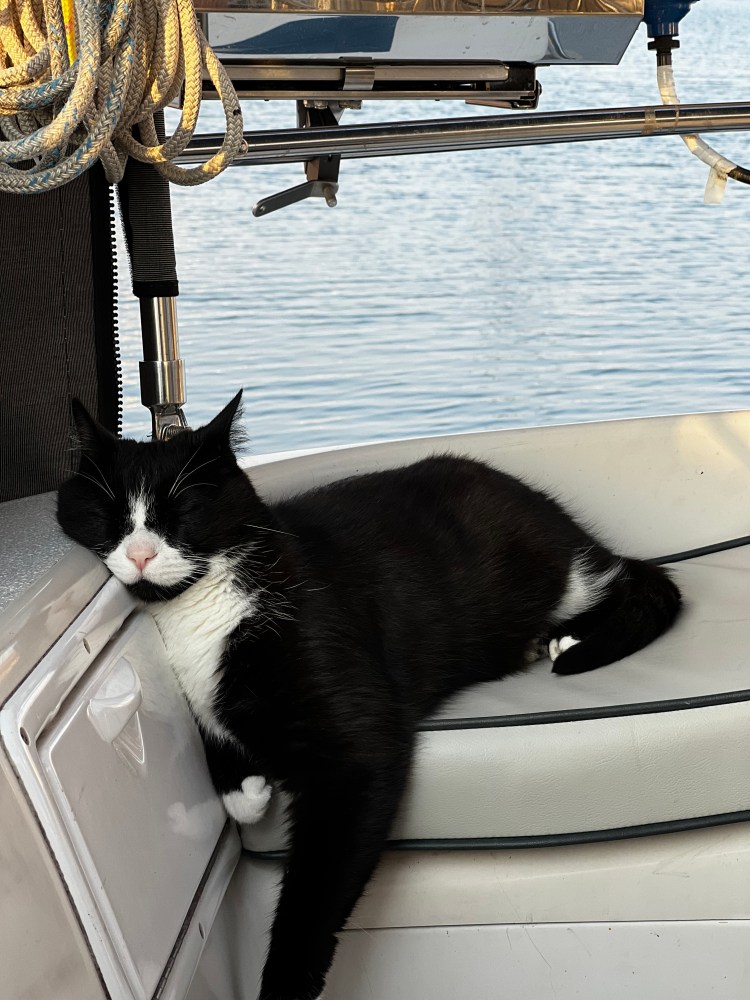
Our first stop was in the archipelago of Hochelaga. Also called the Montreal Islands, they consist of 200 to 300 islands where the St. Lawrence and Ottawa River meet. Some are the larger Islands which make up the city of Montreal and some are smaller, even uninhabited – many are part of a bird sanctuaries and Nature Conservancies. Since our little deck fluff, Momo (our cat), loves to watch birds, we made the decision to anchor east of the city of Montreal, more specifically south east of Île de l’Aigle. It was only a short 11 mile motor and since we had left Longueuil Marina late morning this was the perfect stop. It was hazy and hot with no wind again, and after anchoring just past lunch we took the dinghy to explore. The islands are flat with few trees and mostly covered in grass and shrubs. They are owned by the Government of Quebec but people have some small cottages and shacks on them with no occupancy rights.
Here is a map of the islands with trails: https://www.natureconservancy.ca/assets/documents/qc/panneau-circuit-nautique-Archipel-Hochelaga-sm.pdf
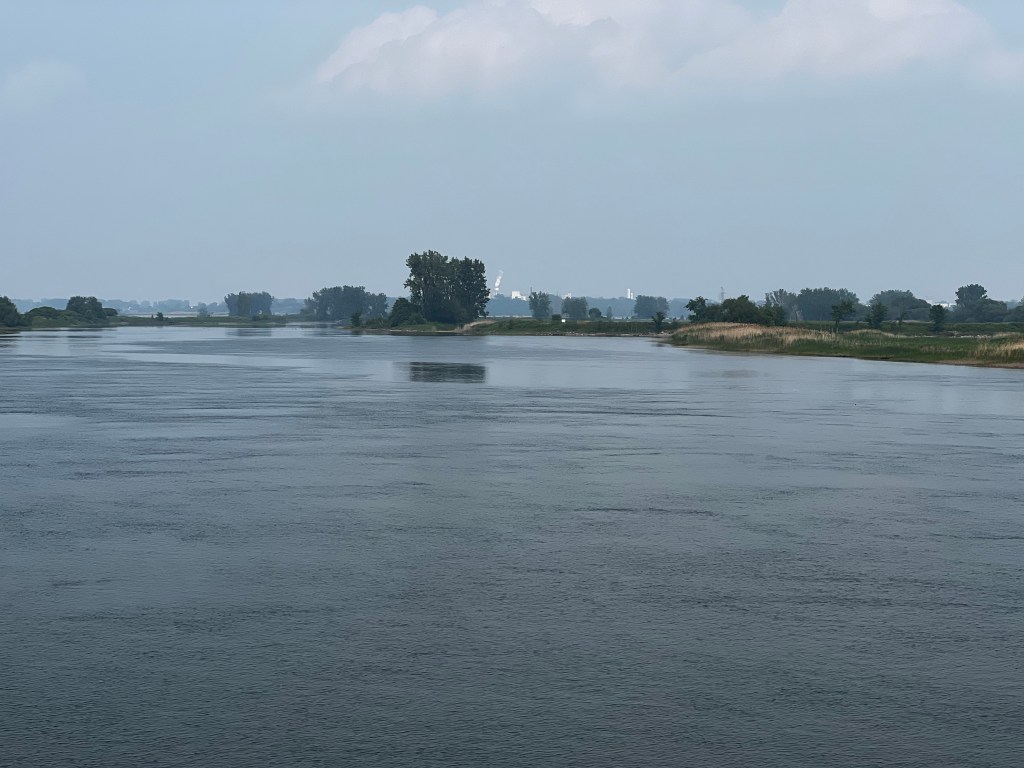
We spend a relatively quiet night at anchor pointed into the current. It is strange, these nights at anchor where the current effects you more than the wind and often you find your boat pointed into the current and the anchor chain disappearing straight under your boat being pulled under the bow. I know this is just the beginning of our learning curve for anchoring in tides and currents. Soon we will be anchoring where ebb tide will point you one way and flood tide the other and then you also have to throw the wind in there which can put you sideways to the waves.
We woke to rain and wind of 10kts. from the North the next morning – more motoring, but at least we were protected and dry in our fully enclosed cockpit. Our mainsheet traveller is just in front of the helm, so sailing under main in the rain is never pleasant as we can’t have the transition (roof) and sides in. We hoisted anchor at 7:18am and although we had the wind on the nose we were still making around 6 knots. (Love going down a river with a current!) By 9am we were loosing the shelter of some of the islands in the river and passing the northern end of Île Bouchard. Now the north wind was kicking up larger waves opposing the current which made for choppy conditions. Sometimes our speed under motor would drop to 3.7kts – at other times we were doing 6.5kts. Eventually, we entered the Archipelago of Lac Saint-Pierre just north of the port of Sorel Tracy. A good place to anchor. There was no way we would want to cross shallow Lac Saint-Pierre in these conditions. We could already feel the wind from the lake whipping into the river from the east.
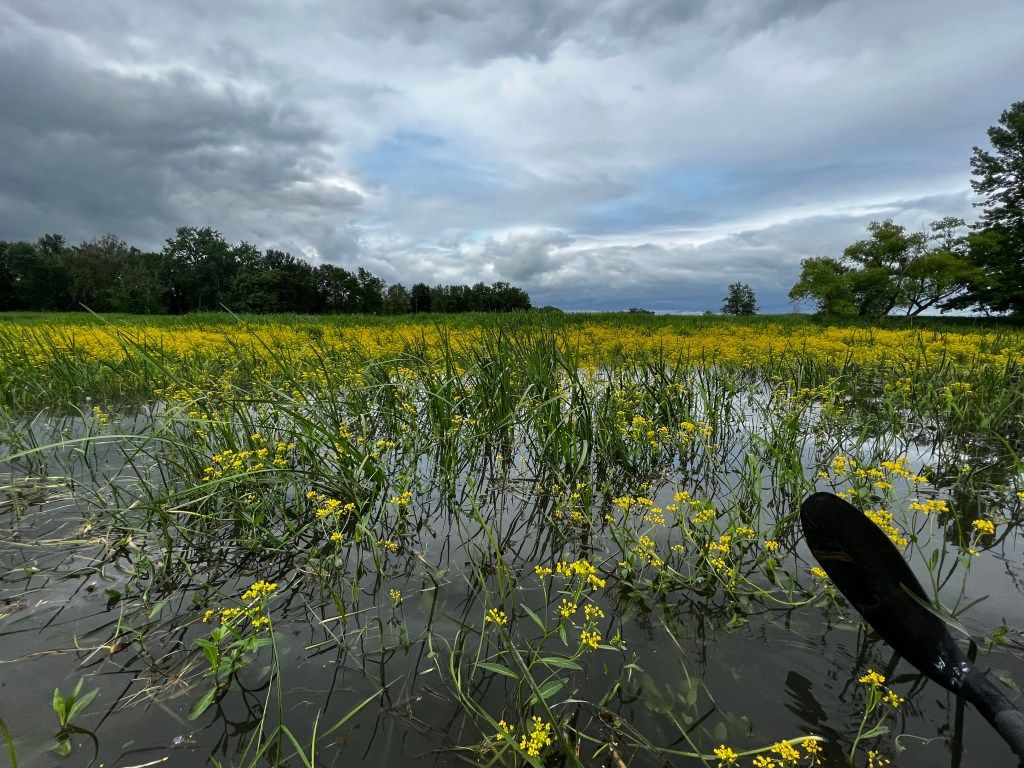
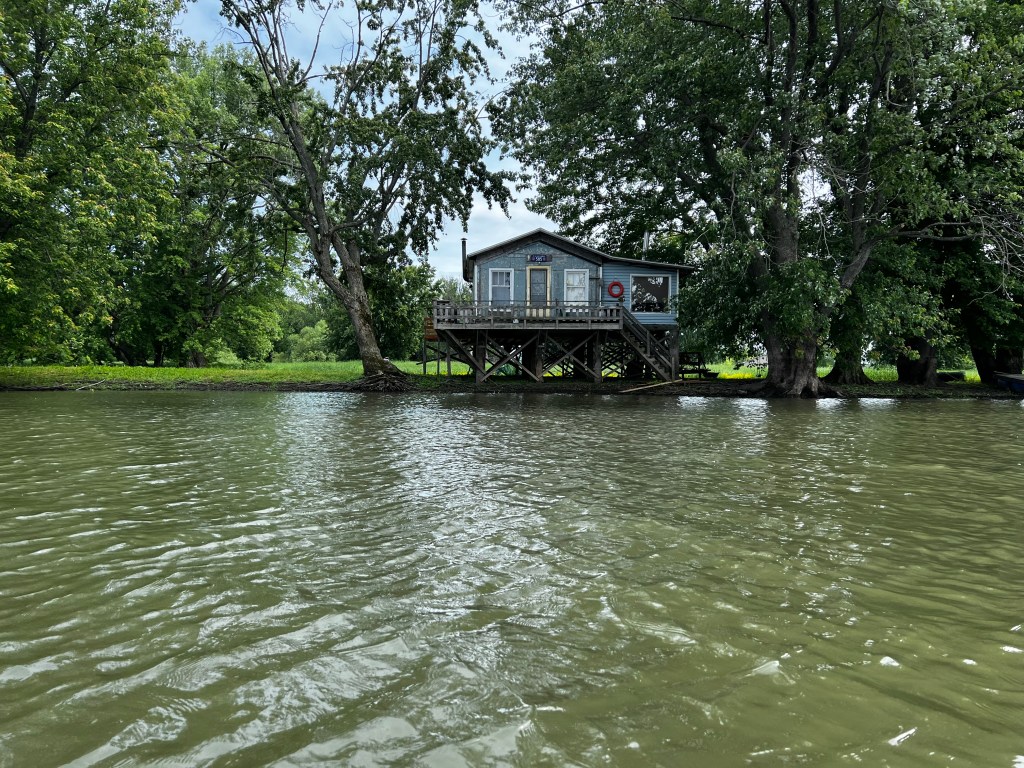


To get out of the wind we turned north into a smaller channel between Île de Grace and Île a la Pierre, hoping to find an anchorage here. It felt so strange motoring along in the drizzle, so close to the shore. These islands were more substantial with well established deciduous trees and small cottages. The channel was plenty deep but we thought that anchoring here would have been a little tricky. There wasn’t a lot of swing room and not being sure how our boat would behave with current and wind in opposing directions, we wanted to play it safe. Doing a little slow sight-seeing tour we turned to port at the end of the little channel and motored back with the current. Eventually, we settled out of the wind, in the channel on the south end of Îles de la Girondeau giving us welcome shelter from the NE wind. Making sure we had an anchor light and some lights on in the cockpit would ensure that the little fishing boats could see us even at night. Although, we had great holding, the next morning we moved just a couple miles down to anchor south of Îles aux Sables, where we had a little more wind but also more room. Here, we spent the afternoon paddling our kayaks around the island and watching the wildlife. The archipelago of Lac Saint-Pierre is comprised of over 100 islands and is a Canadian Biosphere Reserve. The wetlands here are considered of international importance as a stop for many migrating birds. It is also the largest heronry on the continent. There was always a Great Blue Heron flying somewhere in your field of vision or standing stock still along the marshy shores. Sometimes there were so many different bird species flying every which way, it was hard to take it all in. Wish I had brought my bird book to help identify some of the 290 species of birds that can be found here.
Saint-Pierre Lake, which we went through the day after, reminded us a lot of Lake Saint Claire, only too familiar to those who have traveled down from Lake Huron into Lake Erie. Both are extremely shallow with a buoyed shipping channel through the middle. Often we were going through areas with 1′ depth on either side of the channel. There was still a bit of NE wind and the first 2 hours of our trip was still choppy. The closer we got to Trois-Rivières the calmer it became and with the current we were making good progress. Stopping shortly after lunch seemed a bit of a waste of a day with good ebbing current. We were now in a part of the St. Lawrence where we had to pay more attention to tides. Religiously, we studied the Tide Atlas our friend and sailing instructor Rob had lent us for the journey. It literally became our bible for the next couple of weeks. That and the tide tables for Quebec City and Pointe-au-Père. Going east we were lucky that the tides are very minimal by Trois-Rivières as we got accustomed to planning our departures to take advantage of the flow in the river. It is the ebb tides that affect you mostly at first and they are in your favour when you are traveling down the river. We did worry a little about getting into some of the marinas at low tide though, and in Batiscan, where we stopped for the night, we did slide on the mud bottom during our departure out the channel in the morning. It wasn’t a big deal as it’s all soft mud/sand bottom and the tide was moving up. It just verified that our depth sounder was giving us exactly the right measurements.
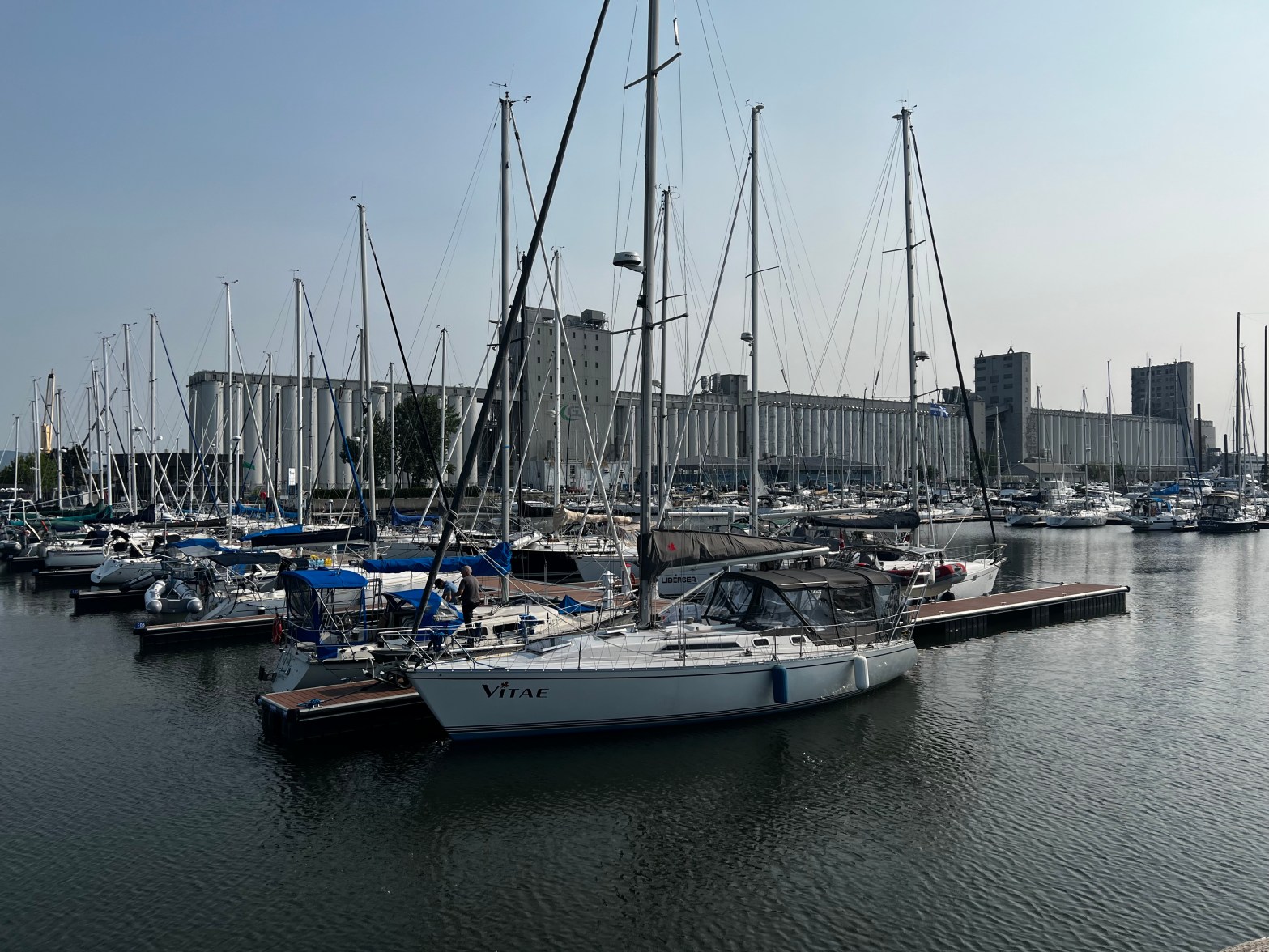
After that it was the Richelieu Rapids which sounds more dangerous than it is. The current is stronger here. Depending on the ebb tide it can be up to 5kts fast. Our friends Uwe and Martina hit 13kts boat speed with their catamaran. We hit this area about an hour after them and only got up to 10kts. These fast sections are only an issue when there is a substantial wind opposing the current and you don’t want to miss the ebb tide and as you will then have to fight the flood tide coming up the river. There’s another fast, fun section just after the bridge in Quebec City. Once you enter the city, there’s lots of boat traffic but the river is relatively wide. We decided to stay in the Port of Quebec Marina, which was a great place to stay to see the city. It’s fun because you enter the marina through a small lock that operates all day until midnight, just for pleasure craft going in and out of the marina. Beware though: There’s a lift bridge in the middle of the lock, and often boats are coming out as the gate opens. Then they tell you to make sure not to go too far into the lock as you have to stop before the bridge and tie to the dock. Yes, the lift bridge is inside the lock. The rest is easy as the floating docks move up with the lock and the bridge lifts for you. It all works seamlessly – but definitely a first for us.
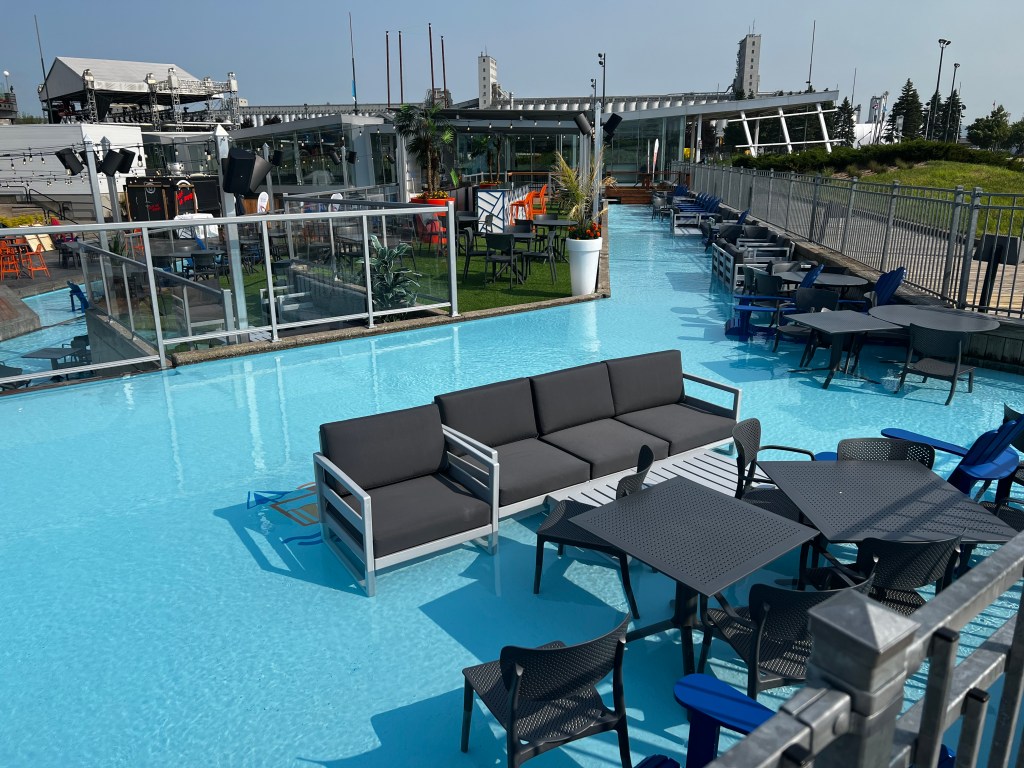
I really don’t know why we don’t have more cities like Quebec City. I couldn’t get enough of the little cobble stone streets, the old houses, the little squares with outdoor cafés and restaurants. I grew up in Europe and this is one thing I truly miss. We even saw a pub/bar at the harbor boardwalk that had little wading pools and the tables and chairs were in the water so you could cool your feet while eating or enjoying a drink. And if you were really hot you could even sit with your butt in the water.

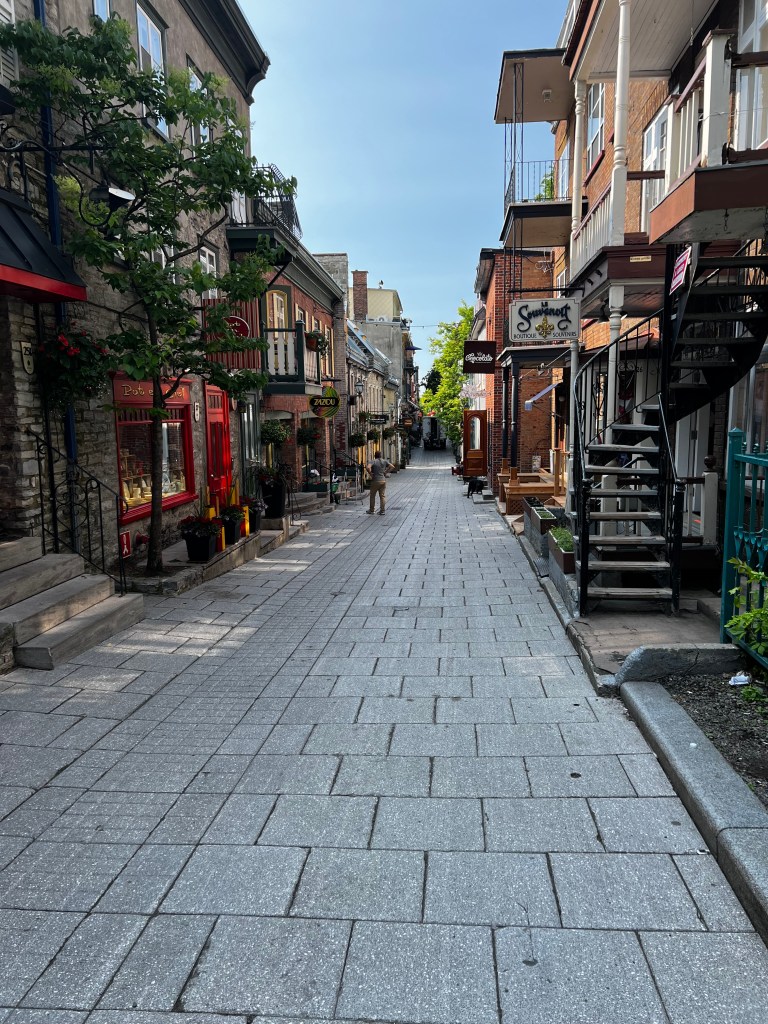
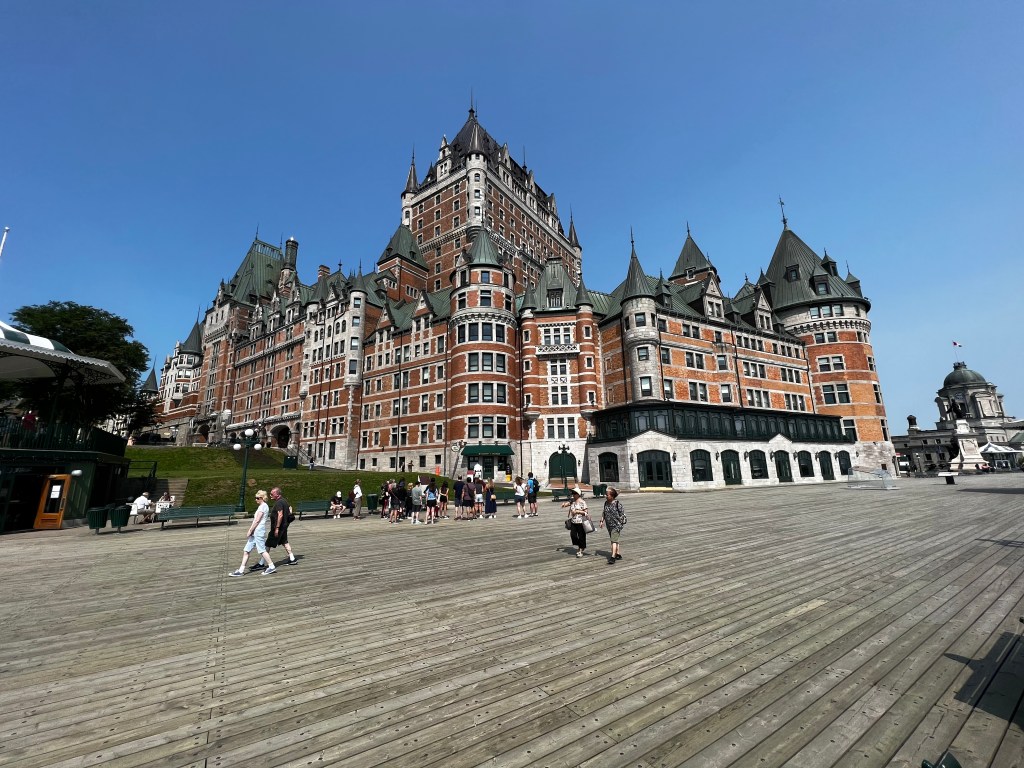
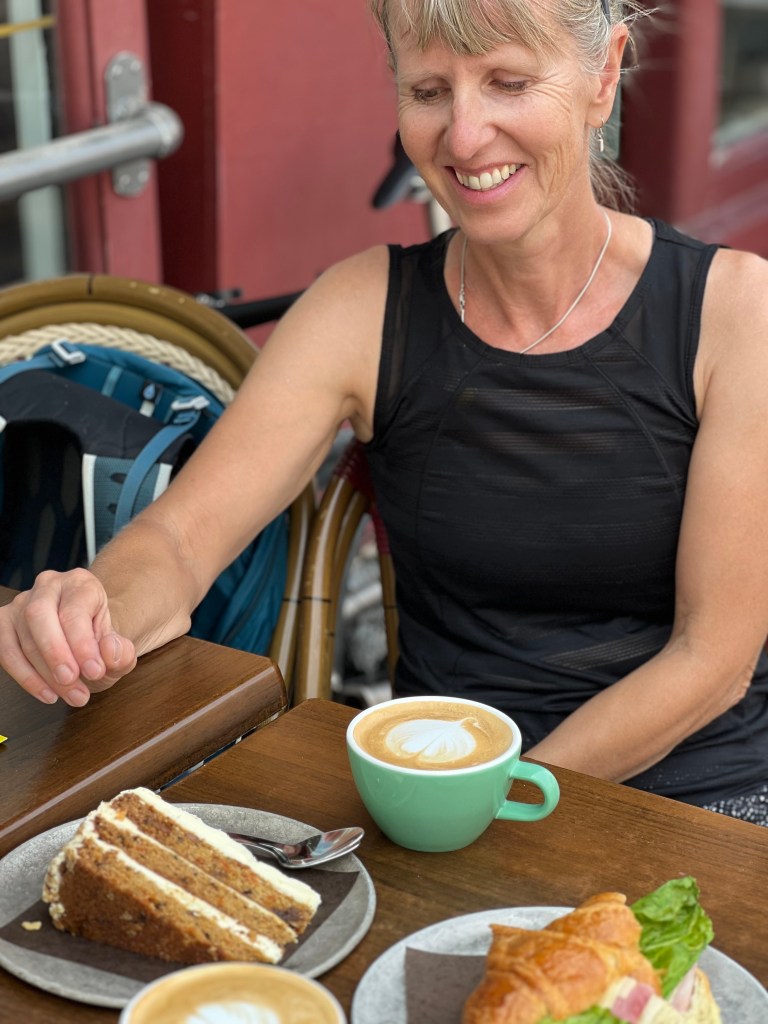
It was just before the national Quebec holiday weekend of Jean-Baptiste Day. Everywhere there were being big stages put up for concerts. Wish we could have had more time to enjoy some of them, but we got there just a little too early.
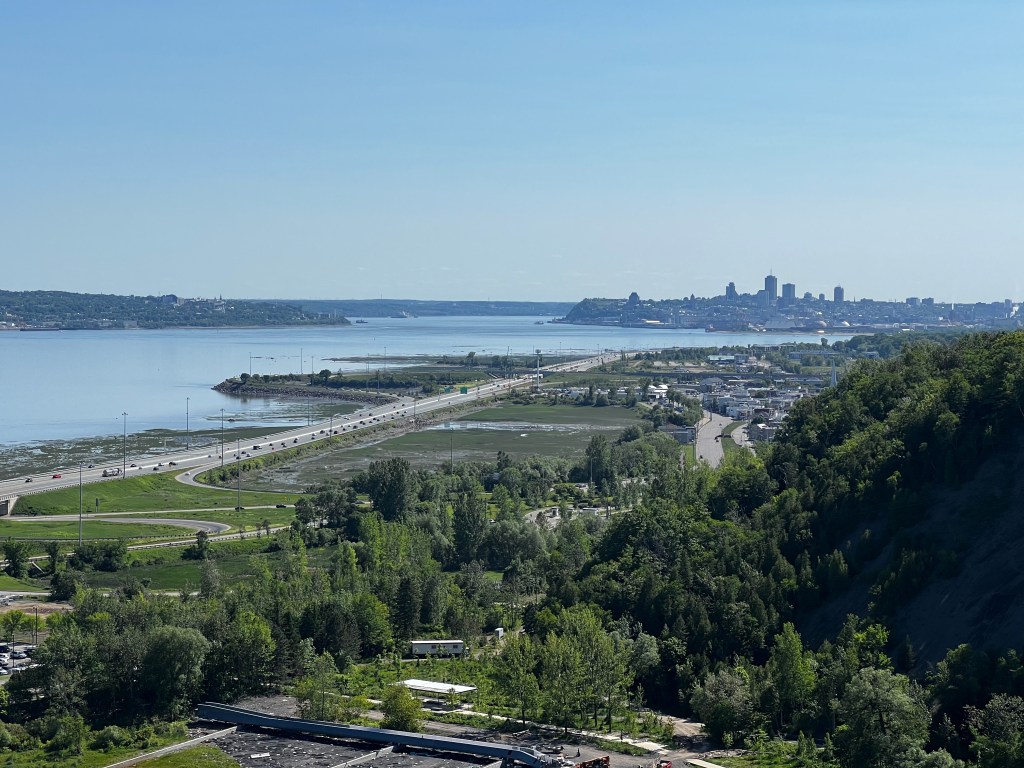
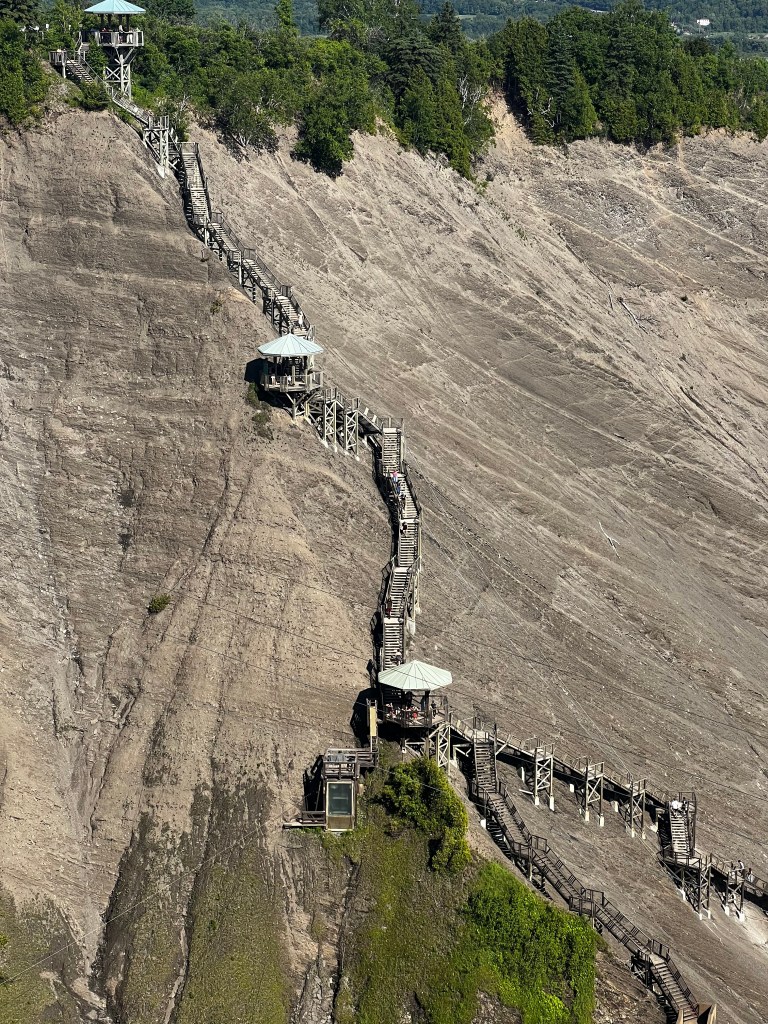
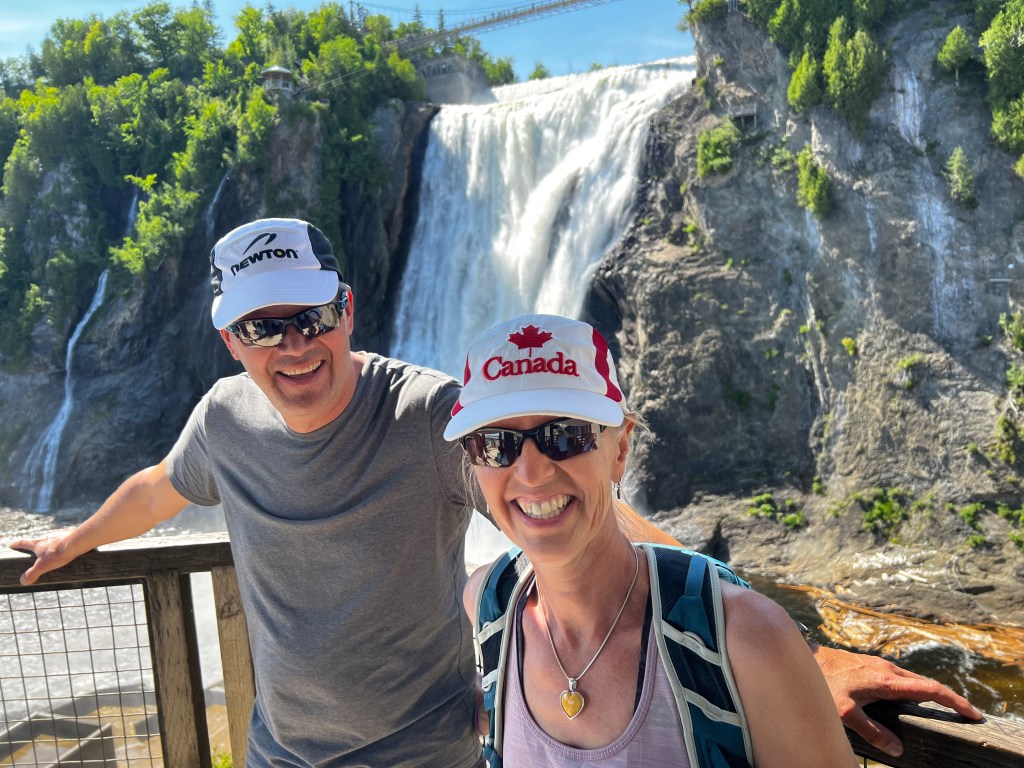
We did enjoy a great cycling trip with our new friends Uwe, Martina and Elias. Uwe had it all figured out and led us on some nice cycling trails to the Montmorency Falls. About 12km from the old port. They are Quebec’s highest falls with a drop of 83 m, which makes them actually 30m higher than the famous Niagara Falls. You will definitely notice their hight when climbing all the stairs to go up and over the top. There’s also a gondola if you don’t feel up to it, but it’s not cheap. We all climbed up and down, since we needed the exercise and then rewarded ourselves with delicious ice cream cones on the cycle back to the marina. Meanwhile, Momo was watching the boat – but I think, his job wasn’t too stressful. In fact, he is really adjusting to boat life much better than we anticipated.
| Date | Description | Distance | Time |
| June 16/23 | Longueuil Marina (Montreal) to Île de l’Aigle (north of the island of Sainte Therese) | 11NM | 1:50h |
| June 17/23 | Île de l’Aigle to the Archipelago of Lac Saint-Pierre (north of Sorel Tracy) | 37NM | 7:35h |
| June 18/23 | Île aux Sable (Archipelago of Lac Saint-Pierre; just moved anchorage) | 2NM | 0:15h |
| June 19/23 | Île aux Sauble to Batiscan Marina | 44NM | 7:17h |
| June 20/23 | Batiscan Marina to Quebec City Marina | 50.62NM | 8h |
| June 21+22/23 | Quebec City Marina | NM | h |
| 7 days | Total | 144.62NM | 24:57h |
 Sailing Vitae